NEW - ISO 27001 Certification and ONNX and Triton Blueprints for Accelerated Inference
A central space for sharing insights, connecting with peers, and building community around AI and data science.
Recently active
Really great article from Anthropic with the announcement of MCPhttps://www.anthropic.com/news/model-context-protocolAnthropic has unveiled an exciting new initiative: the Model Context Protocol (MCP). This open-source standard simplifies the connection between AI assistants and various data sources, making integration seamless for developers. MCP includes developer tools, local server support within Claude Desktop applications, and pre-configured servers for popular platforms like Google Drive and GitHub. Notably, companies such as Block and Apollo are already leveraging MCP to enhance their AI capabilities.A standout feature of MCP is its remarkable flexibility; it is designed to connect with data sources that may not even exist yet. Developers can easily get started with quickstart guides and open-source resources provided by Anthropic. This initiative aims to break down the barriers that have traditionally isolated AI models from essential data, facilitating a more interconnected a
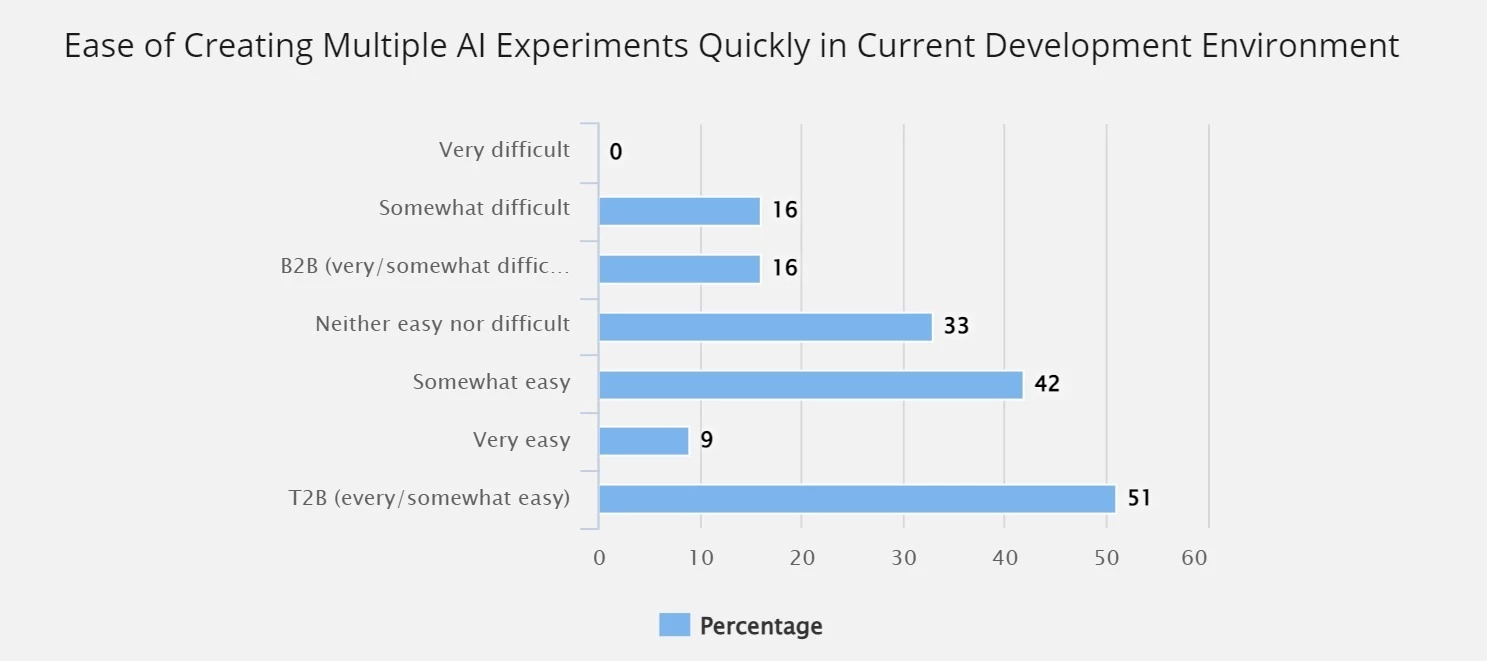
In Part 2 of our survey, we dive into data scientists’ needs for collaboration and scalability in AI platforms. While many find creating multiple experiments manageable, nearly half feel neutral or challenged by the process, signaling room for improvement. Data scientists emphasize the importance of platforms that offer easy deployment, scalability, user-friendly design, seamless integration, and strong security.Most collaboration happens through shared platforms for project management and file sharing, with team communication blending in-person meetings and digital messaging. Moving forward, platform development should prioritize ease of collaboration, integration, security, and scalability. Additionally, aligning with data scientists' success metrics—like accuracy, ROI, and user satisfaction—will help highlight platform benefits effectively.
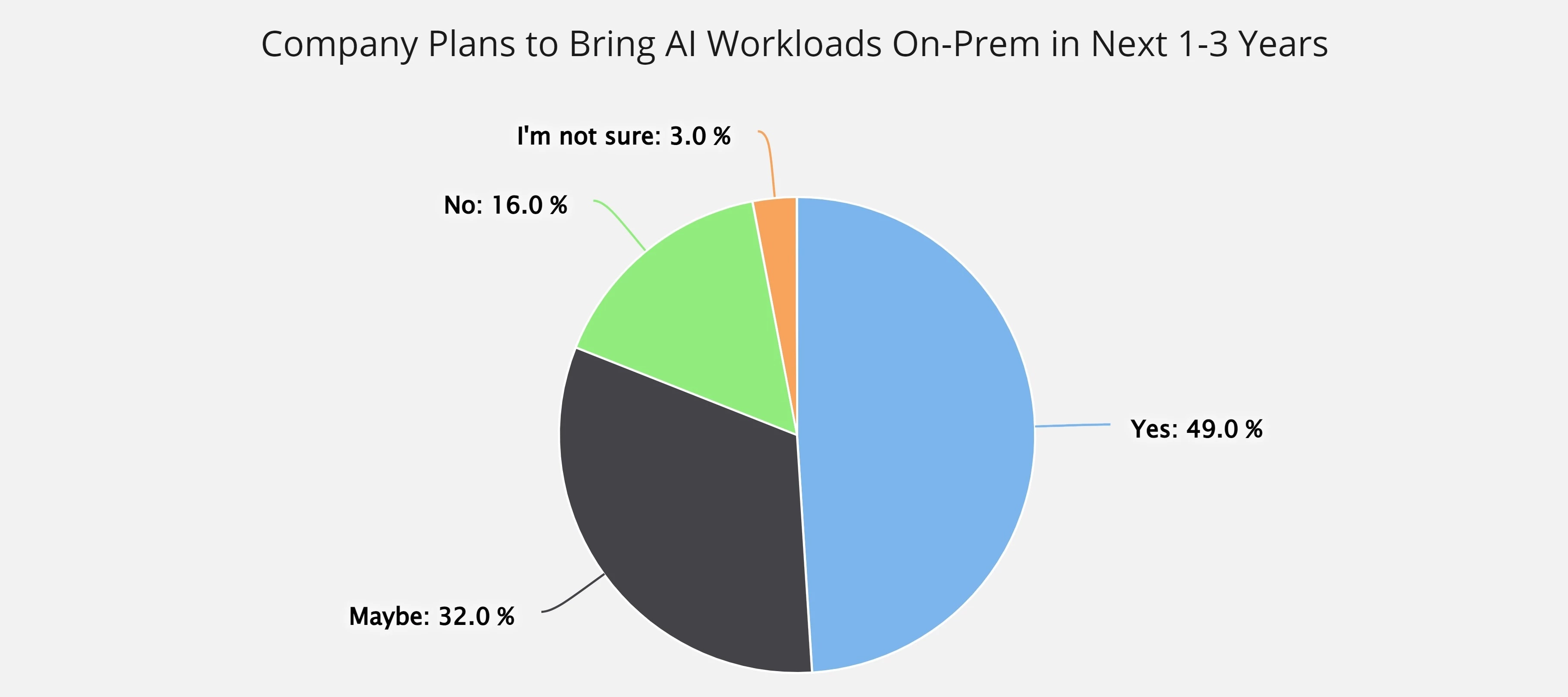
In our recent survey of over 65 data scientists, we set out to understand the perceived value of AI development and uncover the moments when users experience that crucial ‘aha’ feeling with AI/ML platforms. Knowing when users recognize value within the development lifecycle helps us shape better tools and support.A key takeaway? With the majority of organizations planning to bring AI workloads on-premises within the next few years, security and privacy are top of mind for data scientists when running AI/ML workloads locally.Here's what we found:81% of organizations have firm or potential plans to bring AI workloads on-premises within the next 1-3 years.Over 70% of respondents rated security and privacy as very important when it comes to the ability to run AI/ML workloads locally.Stay tuned for Part 2 of our survey insights, where we’ll dive into what data scientists are looking for in terms of collaboration and scalability. Beyond just easy deployment and experiment creation, they’re s
Hello Community Members!October has been an eventful month, filled with engaging activities, insightful news, and exciting events. Let's take a look back at the highlights, dive into our latest webinar recap, and learn how you can contribute your ideas to Boost and AI Studio initiatives. Here’s your October community recap!🎤 Last Webinar RecapZ by HP Boost Webinar On October 4th, we hosted a highly informative webinar focused on maximizing on-premise compute power for AI and ML model training. Akash James demonstrated how he leverages remote GPU access from the Himalayas to work on his multi-modal LLM project, VERONICA. His presentation not only highlighted innovative techniques but also inspired many attendees to explore remote compute solutions for their own AI projects. 🗞️ Latest NewsGartner’s AI PC Shipment Forecast A Gartner report predicts that AI-powered PC shipments will surge by 165.5% by 2025. This forecast has initiated discussions in our community about the future of AI
Gartner projects that AI-powered PCs will hit 114 million units in 2025, marking a massive 165.5% jump from 2024. These AI PCs, defined by their built-in neural processing units (NPUs), include models running on Windows, macOS, and Arm-based systems.By 2024, shipments are expected to reach 43 million units, nearly double the 2023 total. Laptops lead the way, with AI-enabled models predicted to make up 51% of all laptop shipments by 2025, outpacing desktops.Gartner forecasts AI PC shipments to reach 43 million units in 2024, a 99.8% increase from 2023.AI PC Shipments, Worldwide, 2023-2025 (Thousands of Units) 2023 Shipments 2024 Shipments 2025 Shipments AI Laptops 20,136 40,520 102,421 AI Desktops 1,396 2,507 11,804 AI PC Units Total 21,532 43,027 114,225 With nearly half of all PCs integrating AI by 2025, what industries or activities do you think wi
As we wrap up September 2024, we're thrilled to spotlight standout stories, articles, and posts from our vibrant community. Celebrating Our Z by HP Ambassador of the Month: Javier Eluney Hernández 🎉 We were thrilled to honor Javier Eluney Hernández as our very first ever Z by HP Ambassador of the Month. Javier has significantly advanced AI research, particularly in Computer Vision and Generative AI applications within healthcare.With a sustained passion for exploring the frontiers of machine learning, Javier's work spans computer vision, AI in healthcare, and natural language processing. His notable projects include the Medical QA LLM, aimed at providing accurate, context-aware answers to medical inquiries. Javier currently holds the position of Data Engineer II at Brookfield Renewable U.S.. Webinar Announcement: Z by HP Boost Z by HP Boost brings enhanced performance to your data science teams by offering instance access to idle GPU resources. Don't miss our exclusive webinar on Oct
NVIDIA is currently offering a selection of free courses through its Deep Learning Institute, each designed to boost your AI and Data Science skills.Here are a few highlights: Building RAG Agents with LLMs: Dive into the practical aspects of deploying RAG (Retrieval-Augmented Generation) agent systems. Learn how to connect external files, like PDFs, to large language models (LLMs) for enhanced functionality. Generative AI Explained: This no-code course provides an accessible introduction to Generative AI. Explore its concepts, applications, challenges, and opportunities, making it perfect for newcomers to the field. Accelerate Data Science Workflows with Zero Code Changes: Across industries, modern data science requires large amounts of data to be processed quickly and efficiently. These workloads need to be accelerated to ensure prompt results and increase overall productivity. NVIDIA RAPIDS offers a seamless experience to enable GPU-acceleration for many existing data science tas
Some years ago, one of the things that was hyped in the AI Community but that I still think has huge relevance for the future in AI is Federated Learning and Privacy Preserving Machine Learning (PPML). This comes from an idea that future devices will have more than enough power to run the majority of our biggest models, or that models will be efficient enough to run on them. This without losing the aspect of keeping our data private and secure.What do you think about this? Do you think this is where AI Development would head eventually? What others directions could be the most feasible and with the most usage our future? A couple of those that come to my mind are Embodied AI and Causal Machine Learning.
As we wrap up August 2024, we’re excited to highlight some of the most insightful articles and posts shared by our vibrant community. Dive into these expert opinions, groundbreaking research, and practical guides to stay ahead in the AI and data science fields.AI Trends in Data ScienceDelve into the "AI Trends in Data Science" report, brought to you by NVIDIA and our community of 800 data scientists. This report covers the latest trends, key adoption barriers, and emerging opportunities. Enhance your AI strategy by exploring these unique insights. Check out the full report here. Optimizing Language Models with NVIDIANVIDIA's research team has developed an innovative approach to creating smaller, highly accurate language models using structured weight pruning and knowledge distillation. This breakthrough reduces training time, costs, and improves model performance. Learn about how this technique was applied to the Llama-3.1-Minitron 4B model here.Webinar: AI Studio Live Demo RecapOur fi
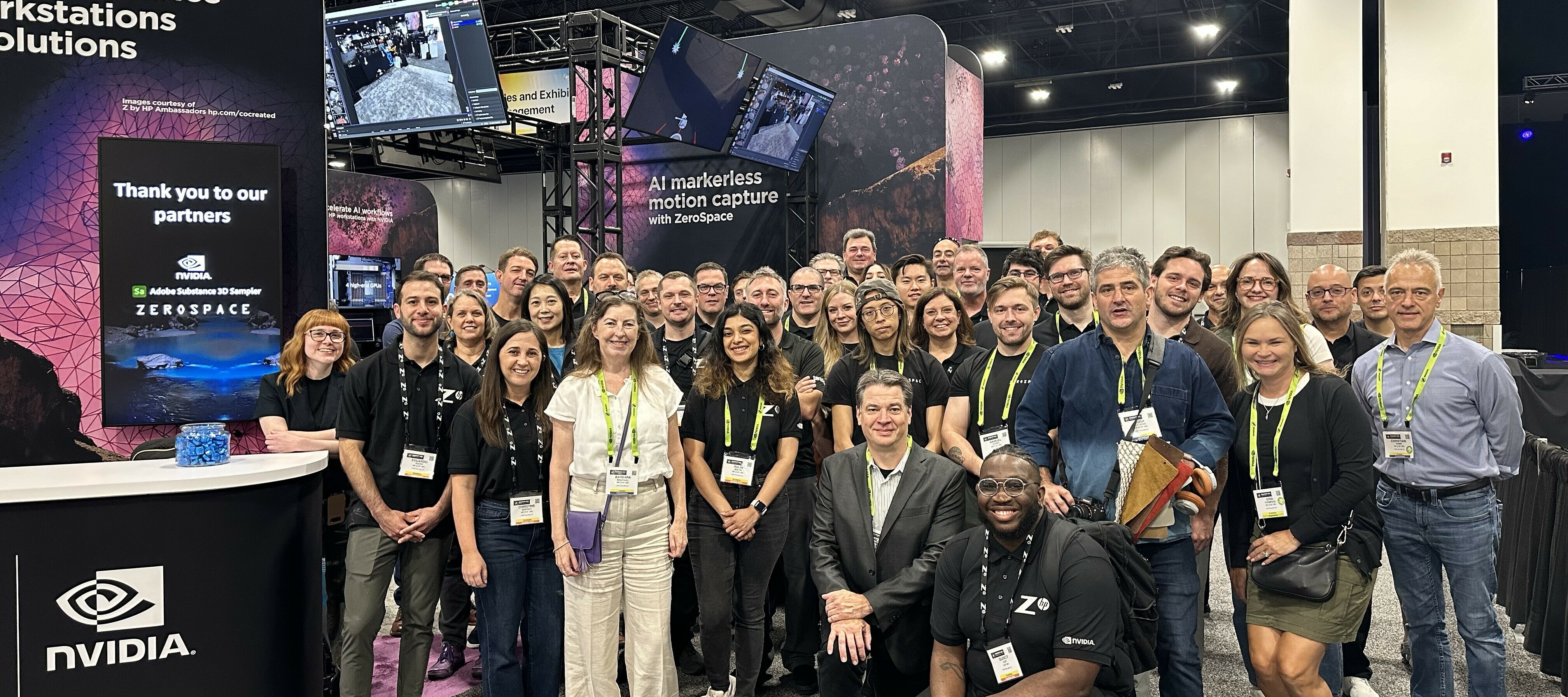
Check out the scene at the Z by HP booth at Siggraph 2024. At our booth, you'll discover the latest advancements in AI workstations and live demonstrations of AI Studio in collaboration with our partners, NVIDIA and Zerospace.What is Siggraph?ACM SIGGRAPH is a special interest group within ACM, and SIGGRAPH 2024 is the premier conference on computer graphics and interactive techniques worldwide.
Post about your data science and AI stack—what tools and languages do you usually work with for your projects? Use the following format to answer 😎 Programming Languages:Data Analysis and Visualization:BI Tools:Database Warehouse: Cloud Platforms:Compute Resources:Job Title:Industry:
Already have an account? Login
Enter your E-mail address. We'll send you an e-mail with instructions to reset your password.